

Nothing Exists Alone
Understanding Interdependence
13 July 2026
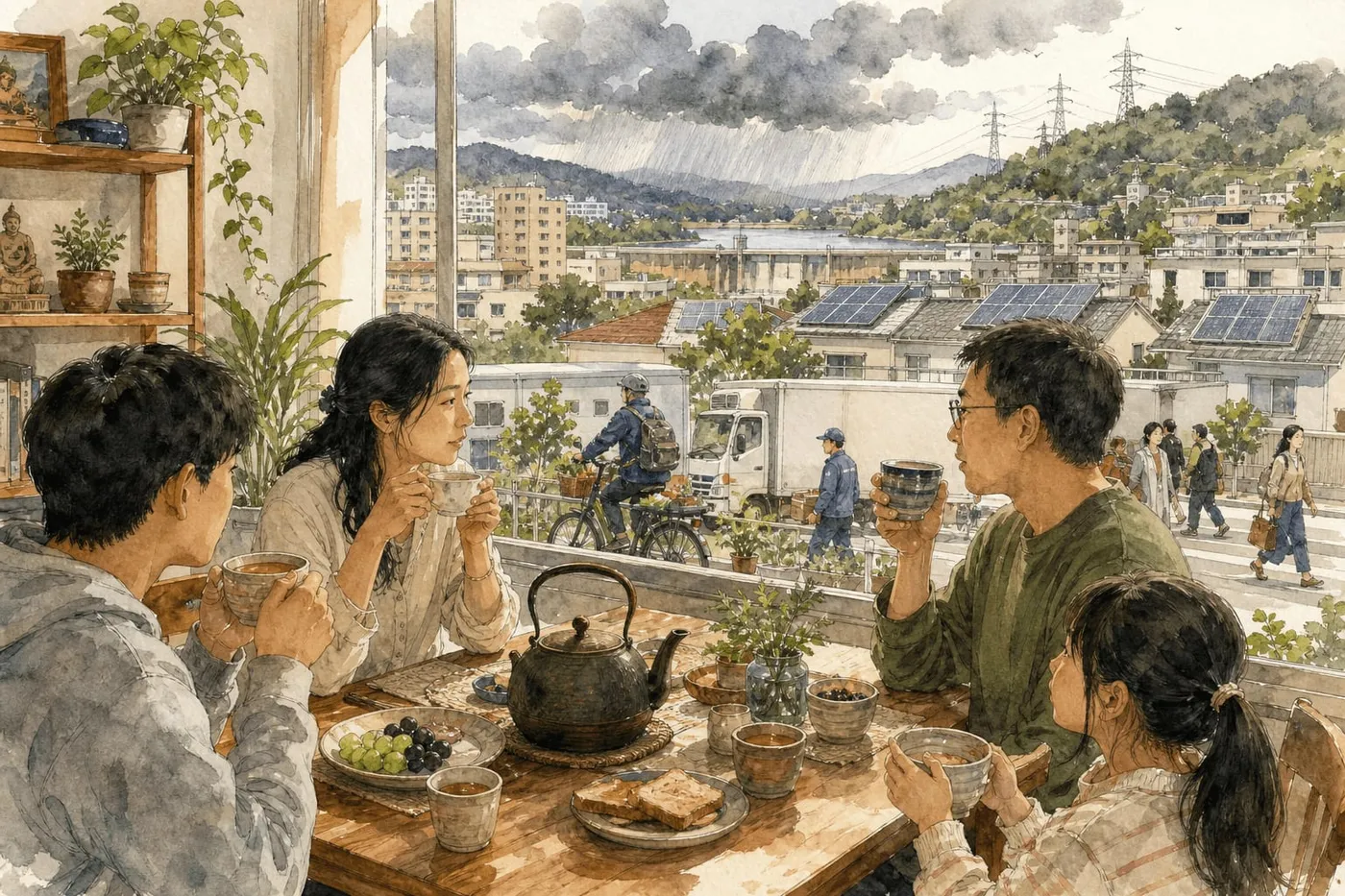
Take an ordinary cup of tea. It seems like a simple object. But look more closely. The tea leaves required soil, sunlight, rain and human labour. Someone cultivated the plants. Someone harvested them. Others dried, packed and transported them. The cup was made from materials extracted somewhere from the earth. The water travelled through an enormous system of reservoirs, pipes, pumps and treatment facilities.
Electricity heated the kettle. Countless people whom we will never meet contributed to this one ordinary moment. Buddhism calls this interdependence. Things arise because conditions come together. Nothing exists entirely by itself. This principle lies at the heart of the Buddhist teaching of dependent origination.
At first it may sound philosophical, but it changes how we see everyday life. Consider something as personal as success. We may say, “I achieved this through hard work.” That can be true. But our effort also depended on education, health, teachers, family circumstances, social institutions, opportunities and countless conditions we did not create ourselves.
Recognising this does not diminish achievement. It places it within reality. The same applies to difficulties. Our actions matter, but human beings are also shaped by circumstances, histories, communities and conditions. Understanding interdependence therefore encourages both responsibility and humility.
It also changes our relationship with the environment. If the air we breathe, the water we drink, the food we eat and the climate that sustains us are interconnected with our lives, environmental destruction is not something happening “out there.” It happens within the network that keeps us alive.
And interdependence naturally points toward compassion. If my wellbeing depends partly upon others, and theirs partly upon me, then the sharp division between “my interests” and “their interests” begins to soften. We remain individuals. But we are individuals within relationship.
A thought to carry with you
Before using something today—a phone, a meal, a bus, a book—pause for a moment and consider how many lives and conditions made it possible.
Connection to the Buddhist Path
Dependent origination (pratītyasamutpāda) teaches that things arise through causes, conditions and relationships rather than existing independently by themselves. This insight reaches from the deepest Buddhist philosophy into the most ordinary parts of life. At Dzongkar Choede it becomes visible every day: study depends upon teachers, meals upon cooks, ceremonies upon preparation, and the life of the monastery upon countless acts of service. Interdependence therefore becomes more than a philosophical doctrine—it becomes a way of understanding community, responsibility and our relationship with the natural world.
Explore further: Community & Daily Life · Ecology & Simplicity · Education & Intellectual Training