
The Second Arrow
29 May 2026
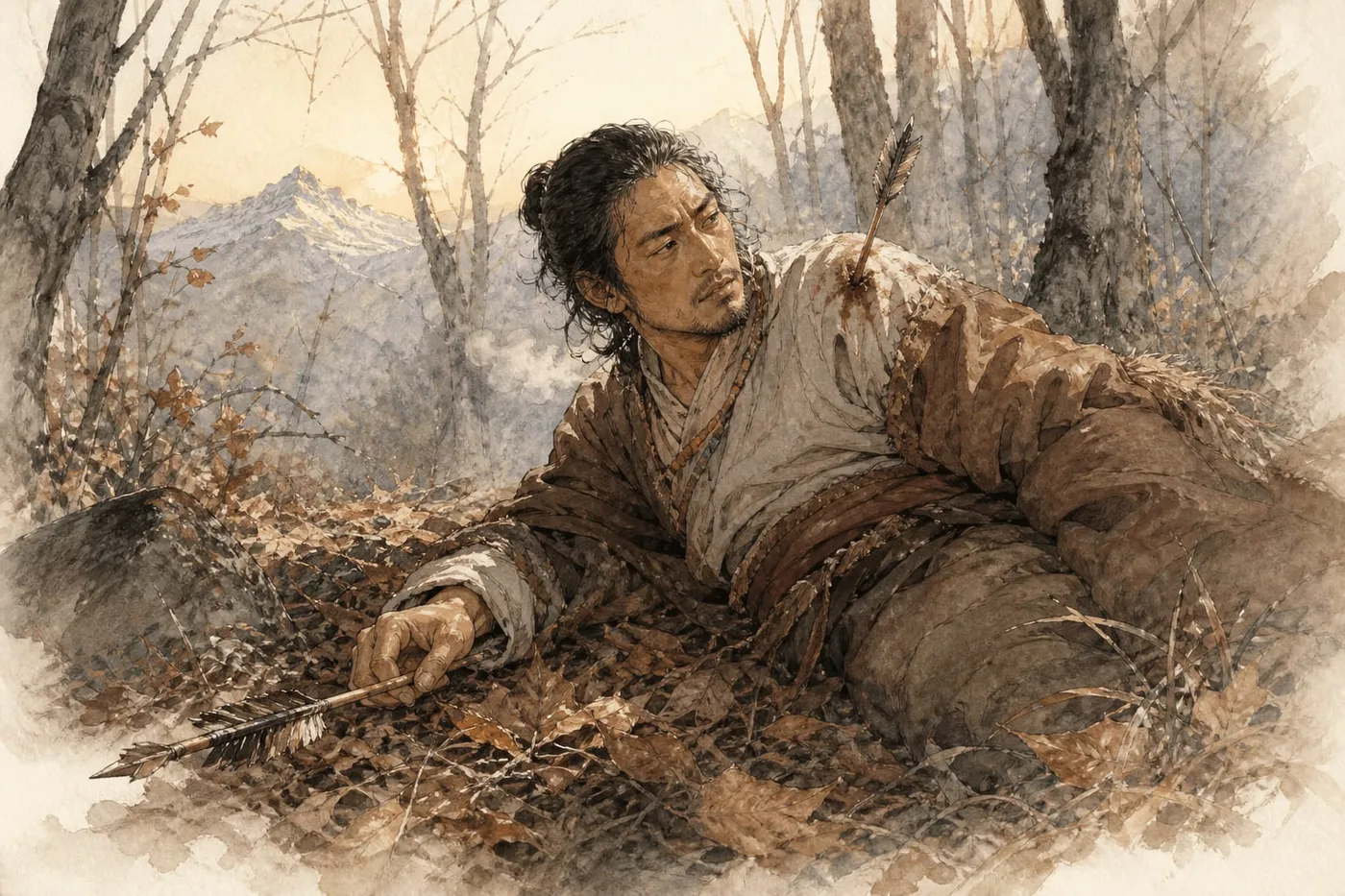
A man walking a forest path is struck by an arrow. He goes down in the leaf litter, and the pain is exactly what pain is: immediate, total, not open to argument.
Then, lying there, he begins the second thing. Who shot it. Why me. It will be worse by morning. I should have gone the other way — I nearly went the other way. The wound throbs on, and above it a commentary opens, and does not close.
The Buddha used this scene to describe two arrows. The first is the one the world fires: illness, loss, the careless remark, the news you did not want. Everyone is hit by it. He was unusually plain about this — no life is arranged so that first arrows miss, not for kings, not for monks, not for himself.
The second arrow is the one the man fires into his own wound while lying there. In the Sallatha Sutta the untrained person, struck once, feels two pains, bodily and mental; the trained one feels the first and declines the second. Not because the arrow stopped hurting. Because nothing was added to it.
We do the same thing today, lying in bed at three in the morning. The thing that actually happened took four seconds — a tone of voice in a meeting, a message left on read. By dawn it has been replayed forty times, each pass adding a motive the other person may never have had, a consequence that has not arrived. Four seconds of event. Six hours of commentary.
So when something lands today, sort it into two piles. What happened, and what you are adding to what happened.
The first pile is always smaller than it felt.
You cannot always dodge the first arrow. You can decline to fire the second.