

Eight Winds
3 July 2026
The Kadampa masters had a test for a practitioner, and it was not how long he could sit. It was what happened to him on an ordinary afternoon when someone praised him.
They inherited a list the Buddha had set out plainly: gain and loss, fame and obscurity, praise and blame, pleasure and pain. Four pairs, eight conditions, and the observation that they arrive in every human life in turn and do not consult anyone about the order. What the Tibetan tradition did with the list was to make it diagnostic. Atisha’s students were taught to watch for the lift — that small internal rise when the good word lands — because the lift and the collapse are the same mechanism, and whoever can be raised by the one can be flattened by the other.
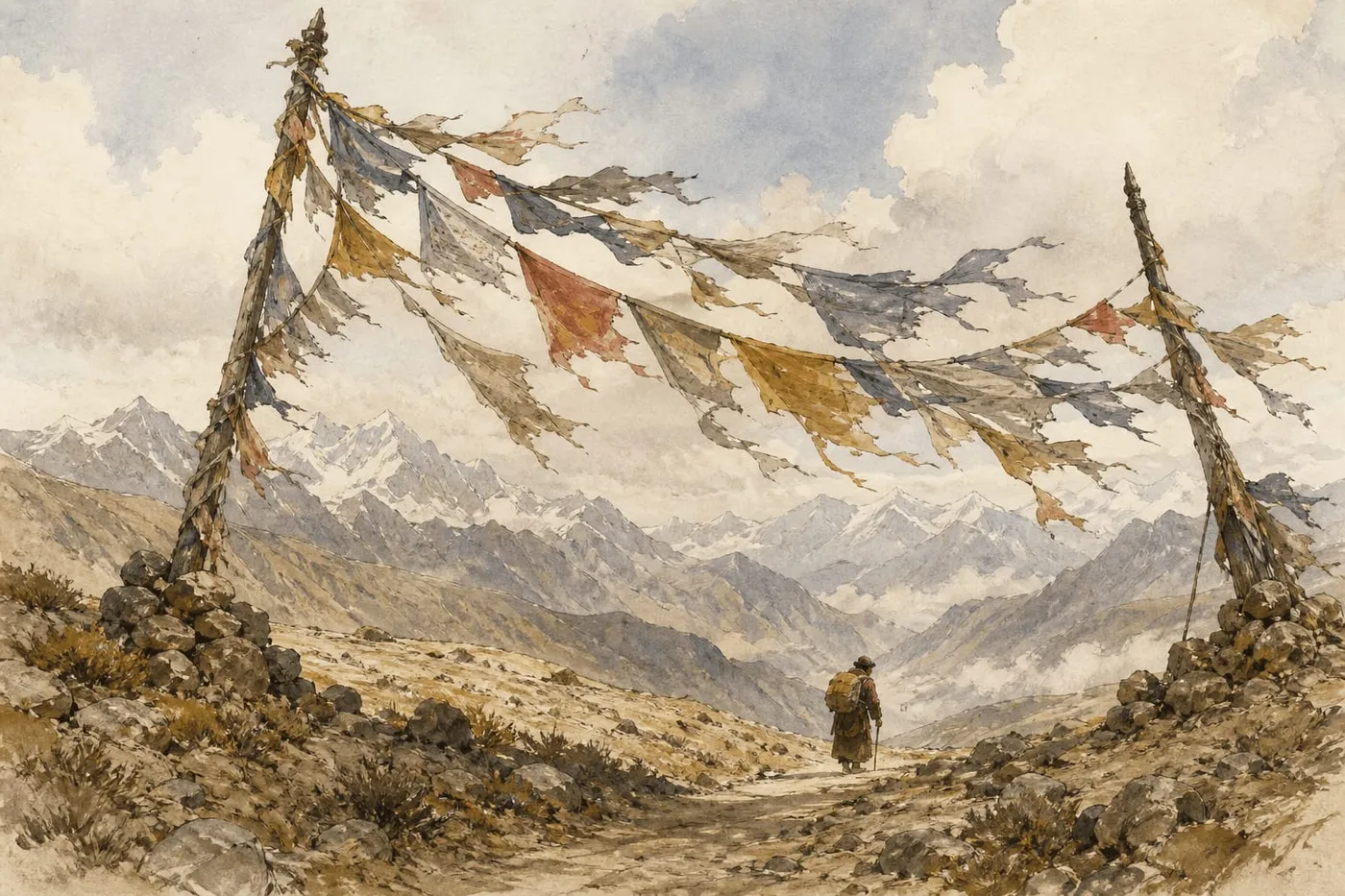
They called them winds because of what winds do. They come from a direction, they are strong, and they stop.
We do the same thing today, except that the winds now have instrumentation. A number that moved. Four hundred somethings by lunchtime and eleven by the following week. A review from a stranger, read six times. Social media did not invent praise and blame; it gave them a live readout, and a person can now watch their own weather all day.
The trouble was never enjoying the good word. Enjoy it. The trouble starts the moment it is allowed to answer the question what am I — because you have then agreed to a contract in which the next bad word gets to answer it too. If praise can make you somebody, blame can make you nobody, and you have handed both to whoever is typing.
Take the praise. Learn from the criticism when it is fair. Let the rest cross the pass and keep going.
A wind is something that passes through. Do not build in it.